
At this stage, space is no longer a physical place, a container of memory, or a projection of inner emotions. Instead, it becomes a medium leading toward the spiritual dimension. Symbolic forms such as shrines and folding screens are transformed into visual metaphors for faith, time, and existence. Through these works, Wang Wulong seeks connections between human experience, history, nature, and the unseen layers of cultural memory.
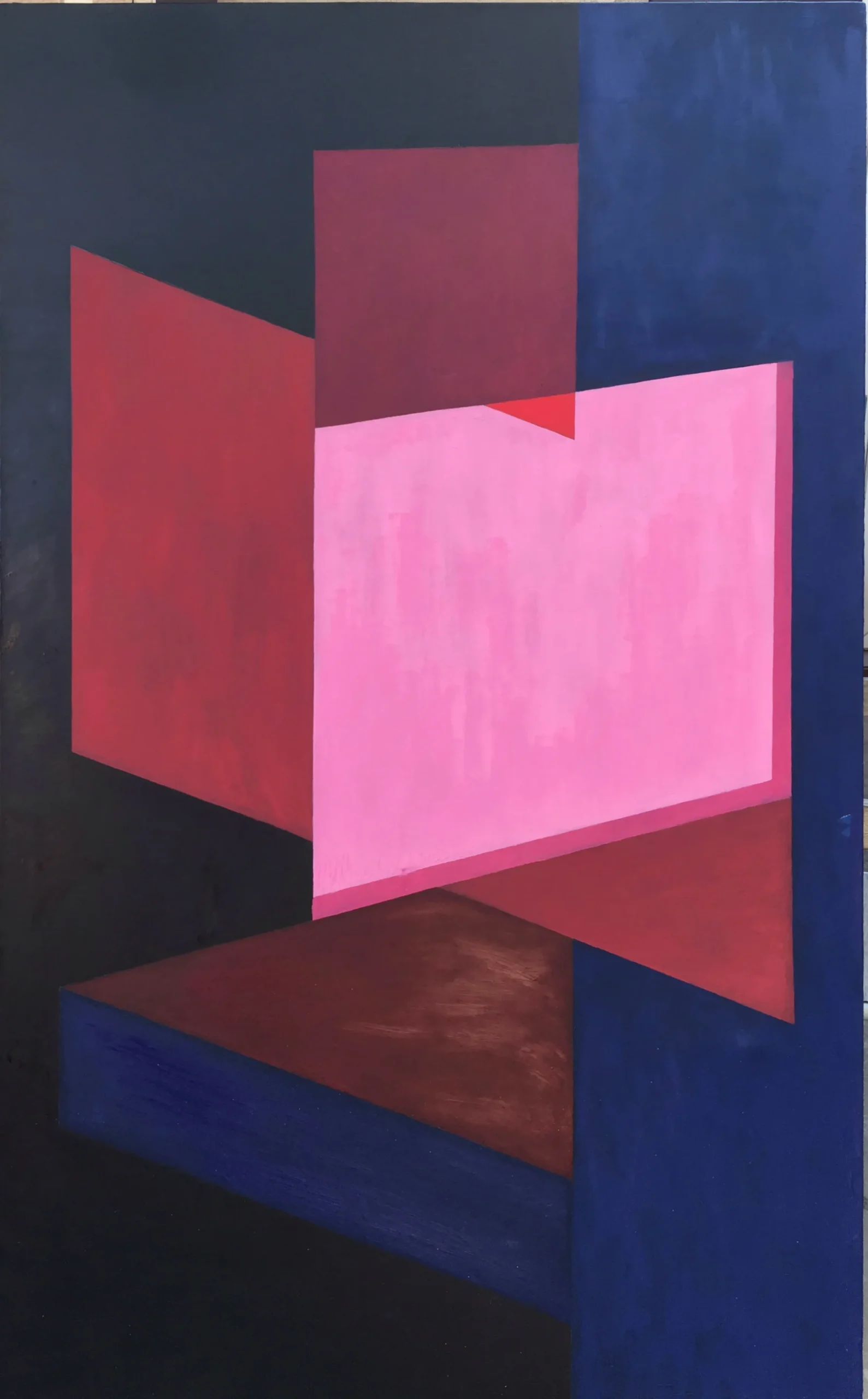
Behind Every Screen Lies a Story
Oil on Canvas
60×100㎝ | 2019
Behind Every Screen Lies a Story continues Wang Wulong’s exploration of spatial structure and psychological perception. The geometric forms resemble architectural partitions and folding screens, while also evoking theatrical stage settings. Through overlap, concealment, and fragmentation, the composition generates shifting spatial relationships and multiple layers of interpretation. Rather than presenting a specific narrative, the artist transforms space itself into a metaphor, suggesting that behind every boundary may exist another memory, experience, or untold story. Through a restrained yet vivid palette, the work creates an imaginative space suspended between revelation and concealment.
Shrine marks the beginning of Wang Wulong’s ongoing Spiritual Landscape series. While continuing his long-standing interest in architectural space, the artist moves beyond formal structure toward questions of culture and spirituality. The red architectural setting evokes the solemn and contemplative atmosphere of Japanese shrines, while the narrow passage suggests a journey from the physical world toward an inner spiritual realm. For the artist, the shrine is not merely an architectural form but also a gateway to understanding Japanese aesthetics and belief systems.
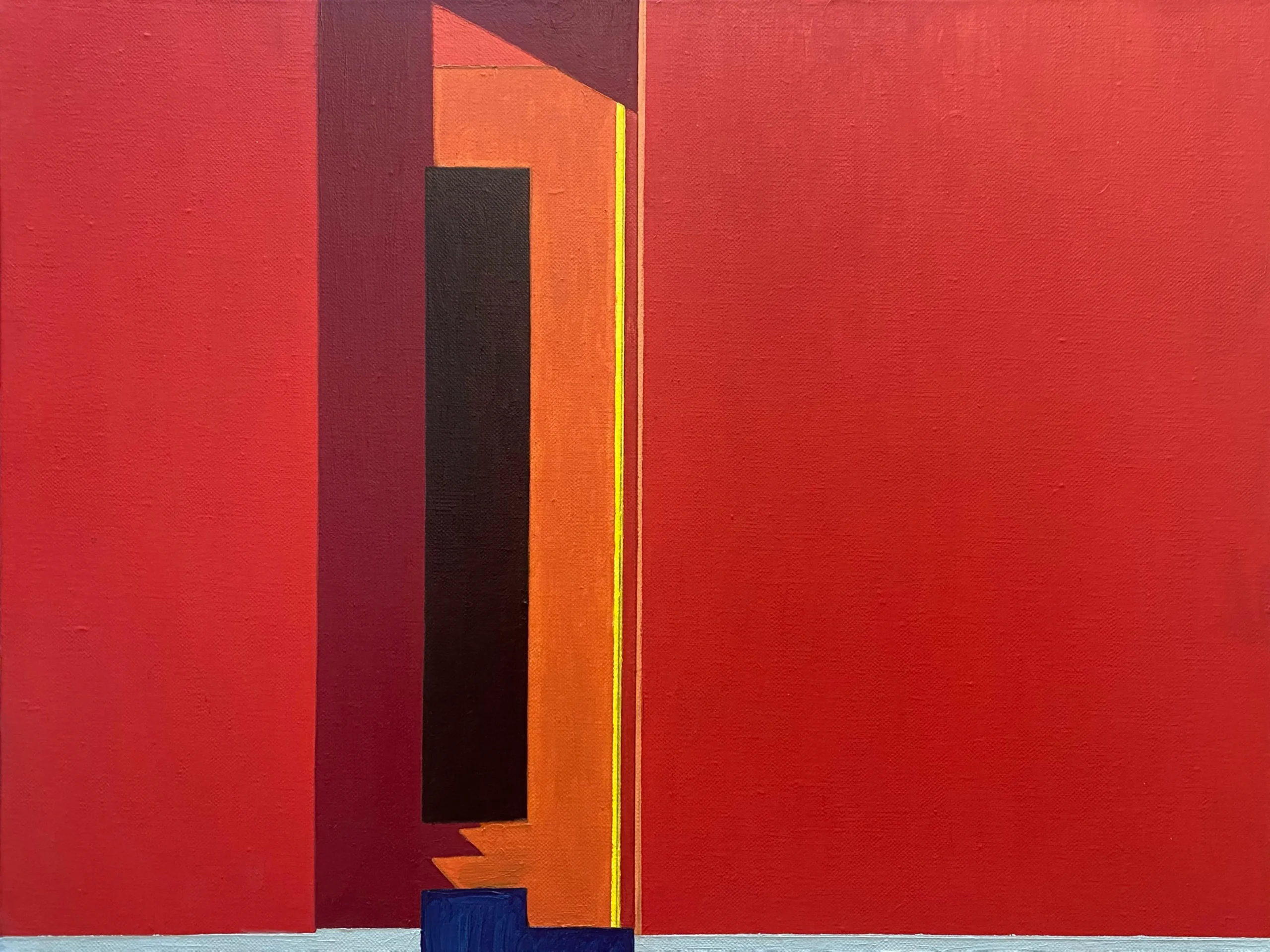
Shrine
Oil on Canvas
60×50㎝ | 2025
・Spiritual Space ・Shrine Series ・Japanese Aesthetics ・Wabi-Sabi ・Mono no Aware ・Yugen ・Cultural Memory ・Spiritual Landscape ・Eastern Aesthetics
Further explorations of cultural memory and spiritual space are ongoing


